
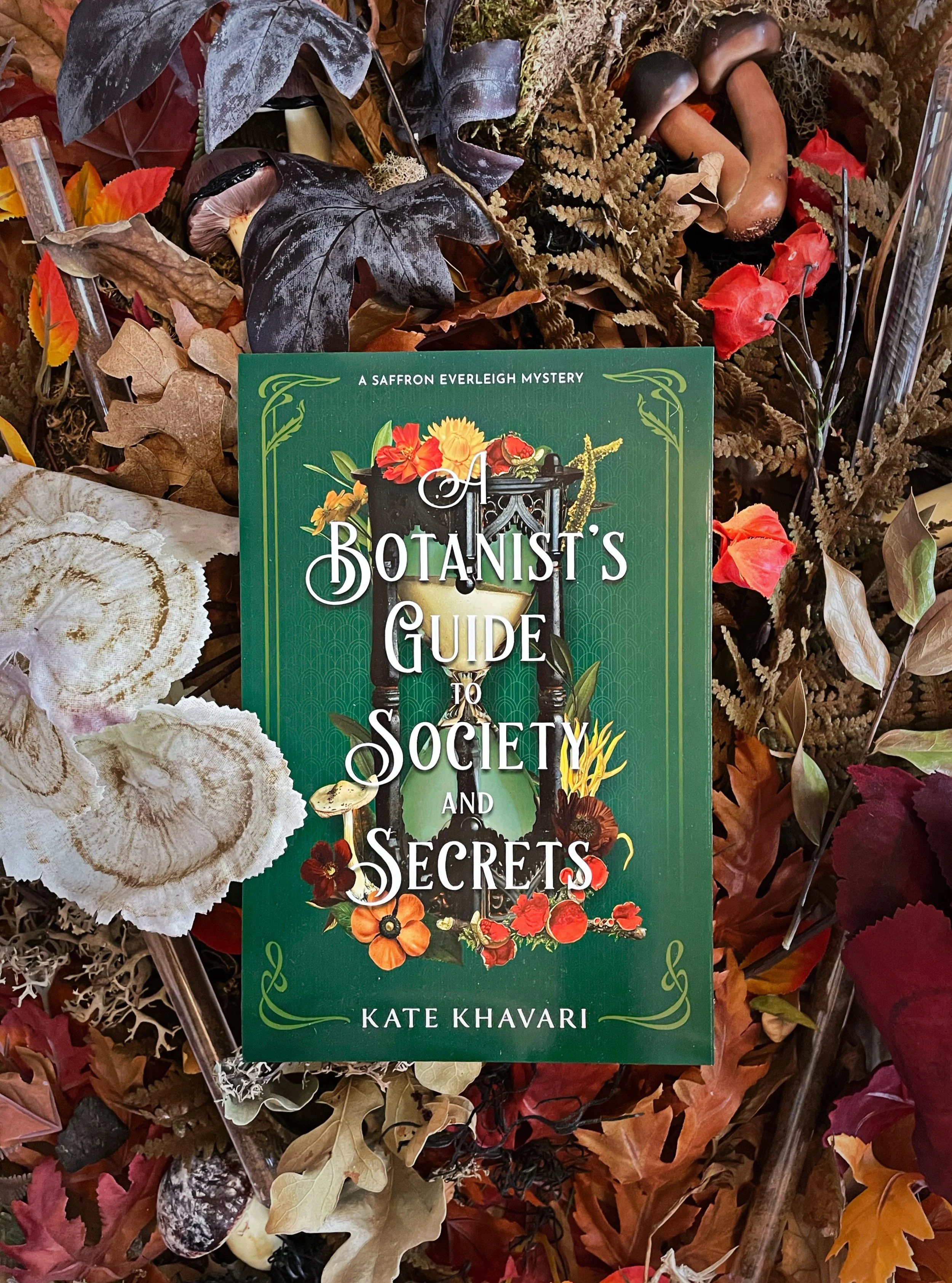
A Botanist’s Guide to Society and Secrets
Saffron Everleigh’s Third Mystery
London, 1923.
Returning from Paris, botanical researcher Saffron Everleigh finds that her former love interest Alexander Ashton’s brother, Adrian, is being investigated for murder. A Russian scientist working for the English government has been poisoned, and expired in Adrian’s train compartment. Alexander asks Saffron to put in a good word for Adrian with Inspector Green. Despite her unresolved feelings for Alexander, Saffron begins to unravel mysteries surrounding the dead scientist.
As if a murder case weren’t enough, her best friend Elizabeth’s war-hero brother, Nick, arrives in town and takes an immediate interest in Saffron. Saffron learns Alexander has been keeping secrets from her, including a connection to Nick, who Saffron and Elizabeth begin to suspect is more than he seems.
When another scientist is found dead, Saffron agrees to go undercover at the government laboratory. Risking her career and her safety, she learns there are many more interested parties and dangerous secrets to uncover than she’d realized. But some secrets, Saffron will find, are better left undiscovered.
Perfect for lovers of:
Agatha Christie
Deanna Raybourn’s Veronica Speedwell
Miss Fisher’s Murder Mysteries
The Lost Apothecary and Dead Dead Girls
Espionage
Dark academia
Family drama
A little romantic groveling
“An entertaining and fun read from first page to last.”
—Midwest Book REview
Frequently Asked Questions:
-
The books are best enjoyed in order, but if you’re here for the mystery and nothing else, each book, including this one, have a standalone mystery that is wrapped up in each book.
-
This book has a mixture of old and new characters, including several family members causing all sorts of drama.
-
Yes and it is magnificent. You can find it at any online retailer.
-
Not yet, it’s under construction!
-
Yes, the Harpenden lab was real. It studied pests and diseases and how to eliminate them to strengthen crop and improve the production of food. All the studies Saffron comes across in her investigation there are taken directly out of reports from the 1920’s from the laboratory, and they did, indeed, develop pyrethrins as pesticides.