Deleted Scene from A Botanist’s Guide to Society and Secrets
Saffron Everleigh finds herself twisted up in a conspiracy at a government laboratory, but she’s not the only one investigating…
Why anyone would care to live in a little town like Harpenden, Elizabeth couldn’t fathom.
She’d never once missed the village bordering the estate where she’d grown up. Talk of crops, herds, and the like were so far from her realm of interest that the prospect of marrying a country squire, even a ridiculously wealthy one, had caused her to quite literally flee for her life. For she’d had no doubt then or now that to stay in the country would have been a slow death sentence for someone like her.
Luckily, Saffron and her need for higher education had saved Elizabeth, giving her an escape route to London, and she’d had nary a whiff of the country since, apart from through the window of a train.
But she’d given up her streak of purely city living, at least for the evening. She stepped off the train onto the cold concrete platform and immediately regretted her decision to leave on her work heels, as a fine mist dusted the town. She only had one pair of good shoes, suitable for the lofty aesthetic of the government minister’s office which she directed, and she couldn’t afford to let them fall into disrepair.
She strode down the street, an umbrella in a jaunty shade of red protecting the fur stole around her neck. A post office, a pharmacy, and a general store stood in a row, bordering one side of Harpenden’s main street. It was so bloody typical it made her eyes roll. Where was the originality? It was as if the people who designed these places simply went from town to town, lining up all the shops in the same way, with the same tired-looking buildings and faded signage.
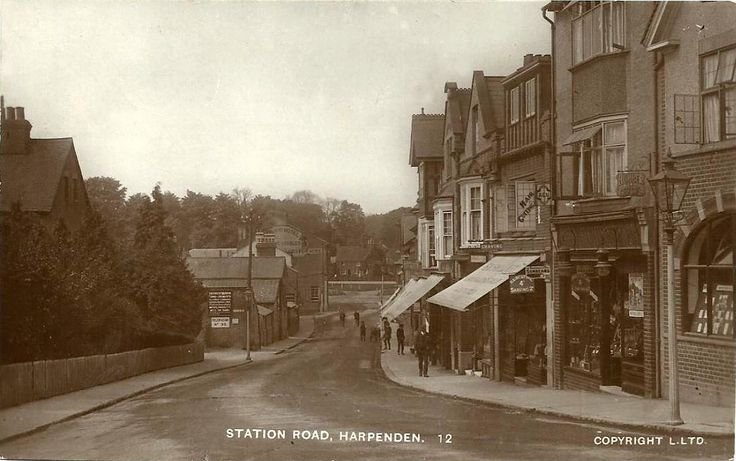
The Dancing Sparrow was no different. The typical wooden sign hung over the door, its paint worn with age and its windows grimy and fogged with condensation.
Elizabeth allowed herself a sigh before she threw her shoulders back, closed her umbrella, and stepped inside.
Country taverns were not exactly her cup of tea, but they weren’t so different from city pubs. A long bar that looked too sticky to contemplate touching lined one wall, behind which were arranged glassware and bottles of alcohol. Two casks of what Elizabeth imagined were ale sat at the far end, and the beefy publican filled two tankards that looked too heavy to lift with two hands, let alone the one the publican he used. It was smoky and smelly and generally too dim to make out many faces. Her friend Freddy owned and ran a pub in London where she’d sipped her own pint on a number of occasions, though his patrons certainly did not complain about electricity being put in about town as these ones were.
Living without electricity in 1923? Elizabeth nearly gasped at the thought.
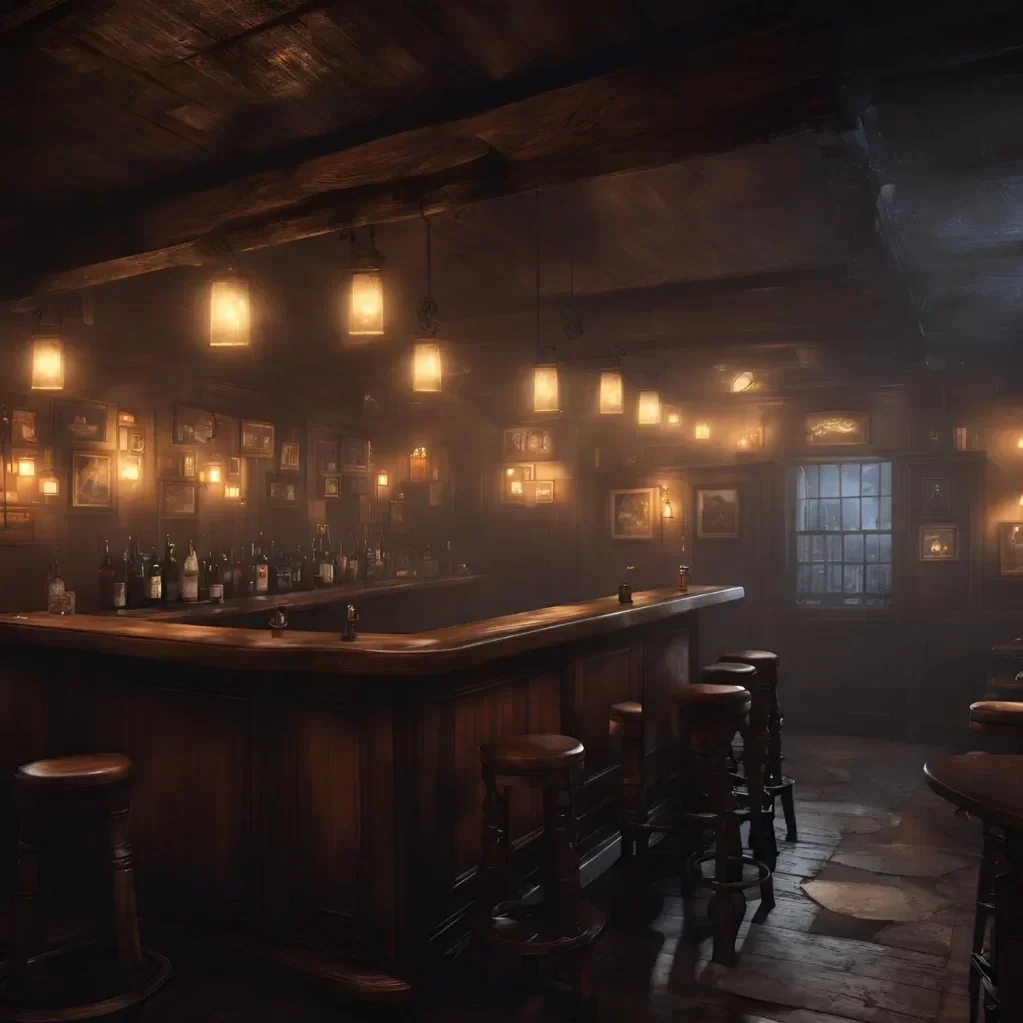
There was no notable hush that fell over the place as Elizabeth, the stranger, came inside. She received the obligatory looks of interest from the young men gathered together at one table, and a few lingering ones that more were of a much more suspicious nature from a handful of older fellows at another. She walked up to the bar and asked for a gin and tonic, which earned her a raised brow, but the publican obliged. He was a middle-aged man in shirt-sleeves and no collar. He rather resembled the black bear she’d once seen at the zoo: large and covered in coarse black hair. His whiskers had clearly not decided if they were a beard or simply extremely outdated. His small, dark eyes were unreadable, surrounded as they were by hair.
“This is a charming establishment,” she declared after taking a sip of the G’n’T. It was a bit heavy on the G, just as she preferred. She stuck her hand out in front of her. “Liza Hamilton. I’m a reporter for The Sketch.”
She’d banked on whoever she spoke to being unfamiliar with the magazine when she’d come up with this scheme. Out of all the scientific lingo Saffron had crammed into the note she’d left for Nick, the Dancing Sparrow had stood out to Elizabeth as something she could actually look into herself. The sooner they solved the mystery at the laboratory in Harpenden, the sooner her brother Nick would get out of their lives. Elizabeth had been keen to see him at first, but the longer he lingered, the more it became clear it was Saffron he was interested in reacquainting himself with, not Elizabeth.
From the uncertain way the publican took her hand—delicately, and after wiping it on his stained apron—she felt she’d guessed that he was unfamiliar with the popular magazine she was pretending to write for.
“Gerald Simms,” he said. His voice was a surprisingly smooth tenor.
“Mr. Simms,” Elizabeth said, brimming with enthusiasm. “I’m in the midst of writing an article featuring hidden gems of Hertfordshire, and I daresay, the rumors are true about the wholesome air of Harpenden. I mean to do a whole write-up about the place. I need only to find an insider, and I believe you are he, are you not, Mr. Simms?”
Mr. Simms blinked at her fast-talking before turning away to tend to another customer. His heavy brow remained furrowed. Elizabeth nursed her drink. She imagined that the sort of fellow who ran a pub for farmers must be accustomed to giving a hard no if one was called for, and she hadn’t been given one.
It took ten minutes of sipping her excellent G’n’T and watching Mr. Simms slinging ales across the bar, he ambled back to her spot on the far end.
“What do you want to know?” he asked.
“Well, I hear that already folk from London have been dropping by Harpenden, perhaps in search of a more quaint atmosphere. Have you seen many Londoners in your pub? I’d like to know just how obscure this place is before I make it seem like an invisible spot on the map, you know.”
“I’ve seen a few,” he said slowly. “Lots come down to buy goods from the manufactures or see the research stations.”
“Ah, yes,” Elizabeth said, bobbing her head and pretending to make a note in her notebook. She’d not thought to snatch a new one from the cupboard in the flat, and she was loathed to write the inanities of this conversation among her nascent lines of poetry. “Tell me about these research stations. I’m afraid I can’t be recommending visitors come to a village swamped with pollution, when that is often the very thing that they want to leave the city to avoid, you know.” Realizing her mistake, that she’d already commented on the clear air of the town, she blustered on. “Or that the bucolic fields they long to whip past in their motorcars will be populated by scientists, rather than cows.” She trilled a laugh.
Mr. Simms looked pained. “Never noticed them in fields, nor polluting the air. Mostly they care about plants and soil and the like.”
“Agricultural research, of course.” Elizabeth nodded, acting as if this was a reasonable conclusion for a reporter to immediately jump to. “And you said they come down from London, do they, the scientists?”
“Some do,” Mr. Simms said. “Some live here.”
“I see, I see.” She put the end of her pencil between her teeth. “I suppose they don’t get on well with your usual clientele.”
“Get on fine. Like I said, they talk about soil and such. Not so different from farmers.”
“How fascinating,” she crooned. “The rustic appeal of the country is a magnet for cits.”
This was punctuated by a ghastly sound next to her. She turned to see the old man with a mammoth gray beard two stools down snorting into a handkerchief before he peered down into it, grunted, and tucked it away into his jacket pocket.
Mr. Simms gave her a dry look.
She smiled broadly. “So very authentic, isn’t it? My readers shall absolutely love it.” She took a gulp of her drink. “I don’t suppose many wish to speak about the latest word on irrigation, though. What else gets your patrons talking these days?”
Elizabeth could have sworn that the bartender’s lips twitched in amusement. He paused their conversation to pull another draught of ale for someone, then slowly wiped away a few drops littering the counter. Though it made her teeth grind to see that he was essentially just wiping the spilled ale over the counter, she waited patiently once again.
“Mostly talk of London, in fact,” Mr. Simms said rather thoughtfully when he’d completed his lengthy and ineffective cleaning. “Where has better food and drink than here.” He snorted. “As if I can’t hear ‘em.” Elizabeth murmured something unintelligible in a sympathetic tone. “Fellow just the other day spent the whole of three pints talking up some casino. Got all the young ones riled up. Pack of them went there, lost a good deal more than they won.”
Mr. Simms looked away from her but leaned an elbow on the counter to draw closer. Voice low, he muttered, “Think that fellow was trying to lure young men who have no experience in the city to that casino. Rob ‘em blind, then send ‘em home.”
Elizabeth let out a casual hum of interest, belying the excitement coursing through her. This sounded quite promising. “But I suppose the science crowd wanted nothing to do with this man advertising his casino?”
Mr. Simms gave her a dark look. “Don’t count on it. For all their book smarts, some have a thing or two to learn about common sense.”
Elizabeth snorted into her drink. He might have been talking directly about Saffron. “One or two of them got caught up in the Londoner’s games?”
“Aye,” he muttered, rubbing at the bar with his filthy rag again.
A lurid casino in the city, bankrupting young rustics and unsuspecting scientists? It had to be related to the mischief at the pathology lab. She sipped her drink, and in an equally low voice said, “And who was this Londoner fellow? And what was the name of this place? I simply must know.”
To her disappointment, Mr. Simms shrugged. “Don’t know his name. ‘Bout my age and had a limp. Casino had a foreign name.”
Elizabeth’s already pounding heart stuttered when he muttered in a terrible accent words she nevertheless recognized, “Le Curieux Cabaret.”